What might happen
Will the multiverse collapse?
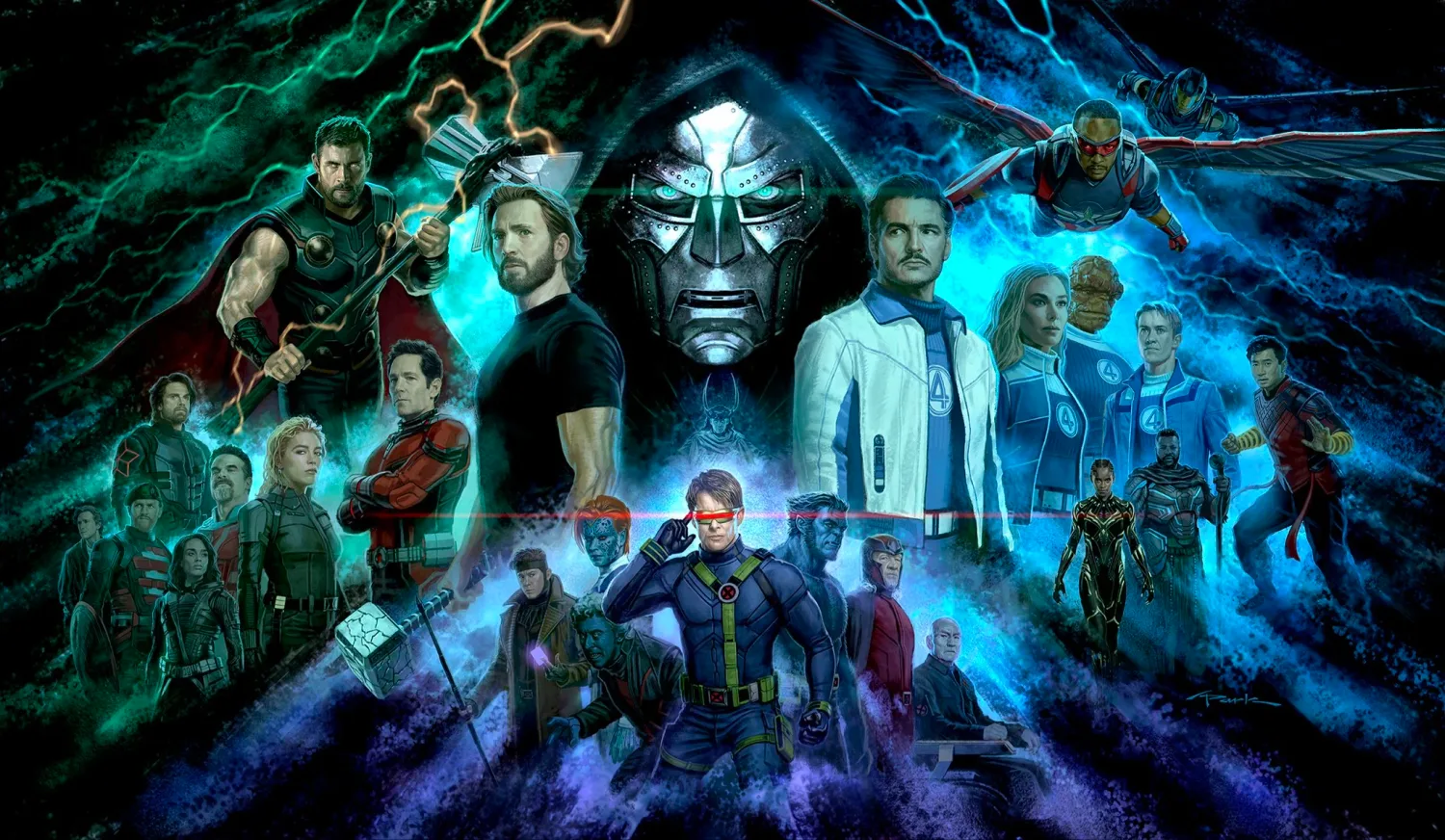
Will the multiverse collapse in Avengers: Doomsday? How incursions, Doom and the road to Secret Wars point toward a reality-ending crisis - and what likely survives it.
Published
The collapse likely begins in Doomsday and finishes in Secret Wars. Expect incursions to devastate realities, setting up the single patchwork world of the finale.
The word “multiverse” has hung over the MCU like a stormcloud for years, and Doomsday is where the storm finally breaks. But to understand where it’s heading, you have to see how patiently Marvel has been building the pressure.
Years in the making
The cracks started small. Loki shattered the “Sacred Timeline” and let its branches grow wild. Spider-Man: No Way Home dragged villains and heroes across realities. And then Doctor Strange in the Multiverse of Madness did something crucial that a lot of viewers half-missed: it introduced the concept of an incursion directly into the MCU, and showed one - an entire universe snuffed out when two realities collided. That wasn’t a throwaway line. It was Marvel quietly loading the gun that Doomsday is about to fire.
So the most likely scenario is straightforward and grim: the multiverse’s collapse begins in Doomsday and completes in Secret Wars, with the incursion as its engine.
What an incursion actually is
The concept comes straight from Jonathan Hickman’s celebrated Avengers comic run. An incursion happens when two universes drift together and collide at a single shared point - Earth meets Earth. The physics are merciless: unless one of the two Earths is destroyed, both universes die. It’s a cosmic trolley problem, and it forces heroes into the most horrifying choice imaginable - commit genocide against another world, or let two worlds perish. Pile up enough of these collisions and the entire multiverse simply unravels (the full explainer).
That is a ready-made cinematic doomsday clock: a threat that escalates on its own, gets worse the longer the heroes hesitate, and comes pre-loaded with dread. It’s almost certainly why this film is called Doomsday in the first place.
It’s worth pausing on what that means for the people in the story. A collapsing multiverse isn’t an abstract cosmic weather event - it’s homes and histories and whole populations blinking out of existence. The reason the incursion is such a potent engine is that it makes the heroes complicit: to save your world, you may have to be the one who ends someone else’s. That moral horror is exactly the kind of pressure that fractures a team, turns allies against each other, and hands a villain like Doom the opening he needs. Watch closely for who’s willing to make that impossible choice - and who refuses.
If you want a preview of just how brutal an incursion can be, Doctor Strange in the Multiverse of Madness already showed you one. In that film, an entire universe - home to a whole council of heroes, the Illuminati - had been wiped out of existence by an incursion before the story even began, reduced to a dead, silent Earth. It was a chilling glimpse of the stakes, and it planted the vocabulary the finale now needs. Doomsday is where that isolated horror goes systemic: not one dead universe, but a cascade of them, collapsing faster than anyone can stop. The scale is almost impossible to hold in your head - every reality is somebody’s home, every collision an extinction - and that is precisely the point. Marvel has spent its recent films quietly teaching audiences to fear this exact scenario, so that when it finally arrives at full volume, you understand instantly why even the gods are afraid.
How it likely plays out
Here’s the probable shape across the two films:
- In Doomsday: the incursions accelerate. Realities start dying, one after another. Doom positions himself to exploit the chaos rather than stop it, and the film ends with the multiverse teetering on the edge of the abyss.
- In Secret Wars: the collapse completes. Whatever survives is scavenged and stitched into a single patchwork world - Battleworld, the setting the source comic is famous for (the comic explained).
Does “collapse” mean everything ends?
No - and this is the crucial part. In the source material, reality doesn’t simply end; it’s rebuilt. For the MCU that almost certainly means a soft reboot: some universes lost for good, the survivors merged into one revised, streamlined timeline that finally folds in the X-Men and the Fantastic Four as natives. The collapse isn’t an ending so much as a demolition to clear ground for something new (will the MCU reboot?).
So why do we rate this only possible rather than likely? Because Marvel likes to keep its options open. It could stage the crisis on a smaller scale - threatening the multiverse, endangering a few key realities, without fully pulling the plug on-screen. The threat of total collapse is near-certain; a complete, on-screen unravelling within Doomsday itself is less so, because that final catastrophe is really the finale’s job.
Our call: possible - with a near-certain setup. Expect Doomsday to push the multiverse to the brink through accelerating incursions, and expect the full collapse-and-rebuild to be the beating heart of Secret Wars. Either way, the reality you’ve followed for eighteen years is about to be permanently rearranged.